
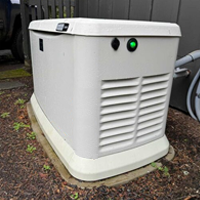
Power outages are no longer rare, short or predictable. Severe weather, aging electrical infrastructure and rising energy demand mean that both residential and commercial buildings are experiencing more frequent and more disruptive power interruptions.
Many homeowners and business owners invest in a whole-house generator to stay powered during outages—and that’s an excellent first step. But what often gets overlooked is the critical role of an Uninterruptible Power Supply (UPS).
The truth is a generator alone is not enough. To fully protect your equipment and data, you need both systems working together.
>
>
The Critical Gap Generators Don’t Cover
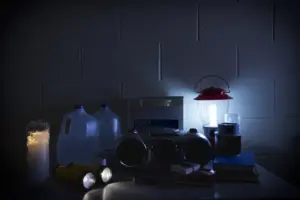 Whole-house generators are designed to provide long-duration backup power, but they don’t deliver it instantly. When utility power fails there is typically a 5–30 second delay while the generator detects the outage and starts. During that gap, power drops to zero.
That short interruption may seem insignificant—but for modern electronics, it’s enough to shut down networking equipment, interrupt critical systems, blackout alarms and surveillance, corrupt data on servers and storage devices, crash smart home controllers and ultimately damage sensitive electronics. If power failures occur frequently, the damage to sensitive electronics becomes accelerated, more widespread and more severe.
>
Enter the Uninterruptible Power Supply
Unlike a generator, UPSs provide instantaneous power the moment utility electricity is lost, ensuring battery backup and clean power for critical devices. Additionally, UPSs also protect against surges in the power grid and startup surges when the generator powers up.
Also known as inrush current, startup surges can be quite significant — often forcing 2 to 10 times more power than a device’s normal operating load. This initial spike is particularly hard on appliances and sensitive electronics. UPSs not only filter this surge, but they also bridge the startup gap.
Together, generators and UPSs create a seamless power-protection strategy.
>
A Growing Problem
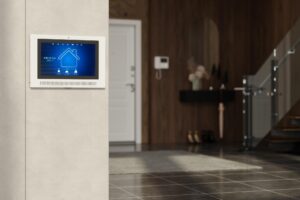 Homes and businesses now rely on technology that simply didn’t exist a decade ago:
- Smart home systems manage AV, security, HVAC and lighting;
- Security cameras and access control systems protect against intrusion;
- Appliances continuously toggle the network; and
- IP-enabled devices deliver entertainment and productivity.
These systems all expect continuous power and can be damaged by abrupt power loss. Additionally, devices that do recover often suffer erased data or corrupted settings.
>
Additional UPS Benefits
As we’ve discussed, generators do supply power but they don’t address power problems inherently present in the utility grid — after all, generators are not designed to be run 24/7 in most applications. UPS systems not only actively regulate power quality and protect against generator startup surges, but they also address the 10 Common Power Problems regularly experienced by home and business owners.
Blackouts, brownouts, sags, overvoltage, noise, frequency variation, transients and distortion all find their way around generators. UPSs protect against these issues while extending appliance and electronic lifespans.
>
Final Takeaway
A generator keeps your building powered, whereas a UPS keeps your building protected. Together, they deliver continuous operation, equipment protection, data integrity and ultimately the long-term reliability of your appliances and electronics.
If resilience matters, one without the other is an incomplete solution.
Future Ready Solutions and Xtreme Power offer a comprehensive line of UPS solutions, including small form-factor, on-line, line interactive and centralized whole-building systems. Learn more at FutureReadySolutions.com.